Ai/ml
HIPAA-Compliant AI Chatbot Development: Everything You Need to Know
- Jul 7, 2026

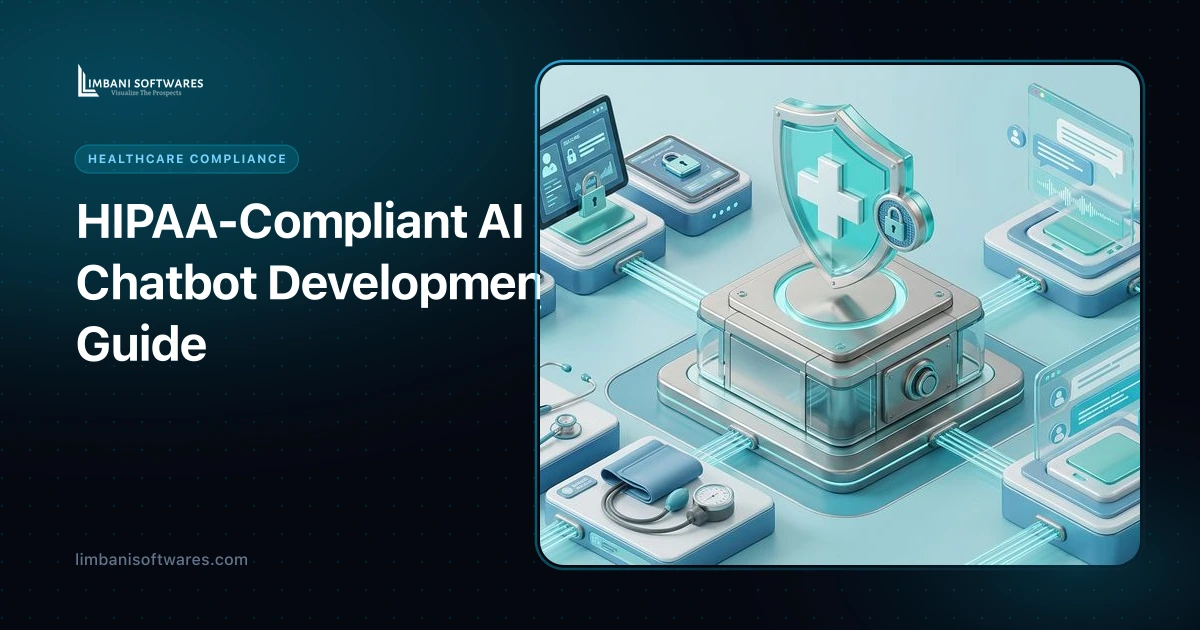
A HIPAA-compliant AI chatbot is one that handles protected health information (PHI) only within safeguards required by the HIPAA Security Rule — encryption, access control, audit logging, minimum necessary data use — and only with vendors that sign a Business Associate Agreement (BAA). There is no official HIPAA certification for software; compliance is an organisational responsibility that well-designed software supports.
This guide covers what that means in practice when you build an AI chatbot or voice agent for a clinic, hospital or health-tech product.
HIPAA applies to covered entities (providers, health plans, clearinghouses) and their business associates in the US. If your chatbot collects, stores or transmits PHI on behalf of a covered entity, it must be built and operated within HIPAA safeguards. A general wellness chatbot that never touches PHI may fall outside HIPAA, but privacy laws can still apply.
•Encryption. Encrypt PHI in transit (TLS) and at rest.
•Access control. Role-based access, unique user IDs and strong authentication for staff tools.
•Audit logging. Record who accessed or changed PHI and when.
•Minimum necessary data. Collect and send to AI models only the data the task requires.
•Secure integrations. Connect to EHR and scheduling systems through secure, authenticated APIs.
•Retention and deletion. Define how long conversation logs are kept and how they are removed.
Every vendor that processes PHI — cloud hosting, telephony, the AI model provider — needs a BAA and appropriate configuration, such as disabling data retention for training. If a vendor won't sign a BAA, don't send it PHI; redact or use a different provider.
•Clear scope. Handle scheduling, FAQs, reminders and intake; avoid diagnosis.
•Escalation. Route urgent symptoms and complex requests to staff immediately.
•Grounded answers. Answer from approved clinic content using RAG, not the model's general knowledge.
•Human review. Review conversations regularly to improve answers and catch issues.
Discovery and data-flow mapping, vendor selection with BAAs, architecture and threat modelling, prototype with test data, security testing, staff training, and phased rollout with monitoring. See our healthcare voice agent blueprint and healthcare software development page.