

How We Built a Retail ERP for Korea Wallpaper Across Malaysia and Singapore
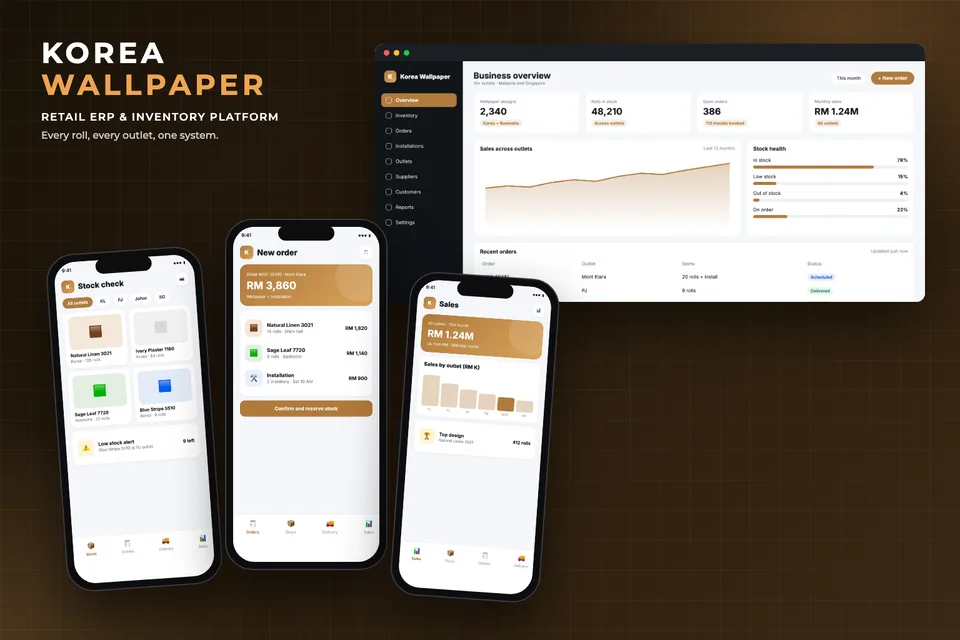
Korea Wallpaper is one of the best-known wallpaper retailers in Malaysia and Singapore, with more than ten outlets and a large social following. As the business outgrew WordPress e-commerce and a legacy 2015 ERP, Limbani Softwares helped build a modern ERP that tracks wallpaper stock across outlets, manages orders and installations, and supports daily business operations, with a data migration that kept core records intact.
Industry
Home Decor Retail
Project Type
Retail ERP
Market
Malaysia & Singapore
Platforms
Web, Mobile
The Solution
We rebuilt Korea Wallpaper's core operations on a reliable ERP, so every outlet sees accurate stock and every order flows smoothly from sale to installation.
Multi-Outlet Inventory
Staff check stock for every wallpaper design and roll across all outlets in real time.
Order Management
Sales orders reserve stock, record room details and track status from quotation to delivery.
Installation Scheduling
Installer teams and dates are assigned to each order, so customers get a clear installation slot.
Low-Stock Alerts
The system flags designs running low at an outlet so stock can be transferred or reordered in time.
Legacy Data Migration
Data from the 2015 ERP was migrated to the new system without changing core records.
Sales Reporting
Managers compare sales by outlet and design to guide purchasing and promotions, including the Roomahs range.
Technologies & Tools
A web-based ERP with multi-outlet inventory, order and installation workflows, mobile access for staff and a safe legacy data migration.


Development Process
The development process involved the following stages:

Business Analysis

Process Mapping

ERP Architecture
Data Migration

Build & Testing

Ongoing Upgrades
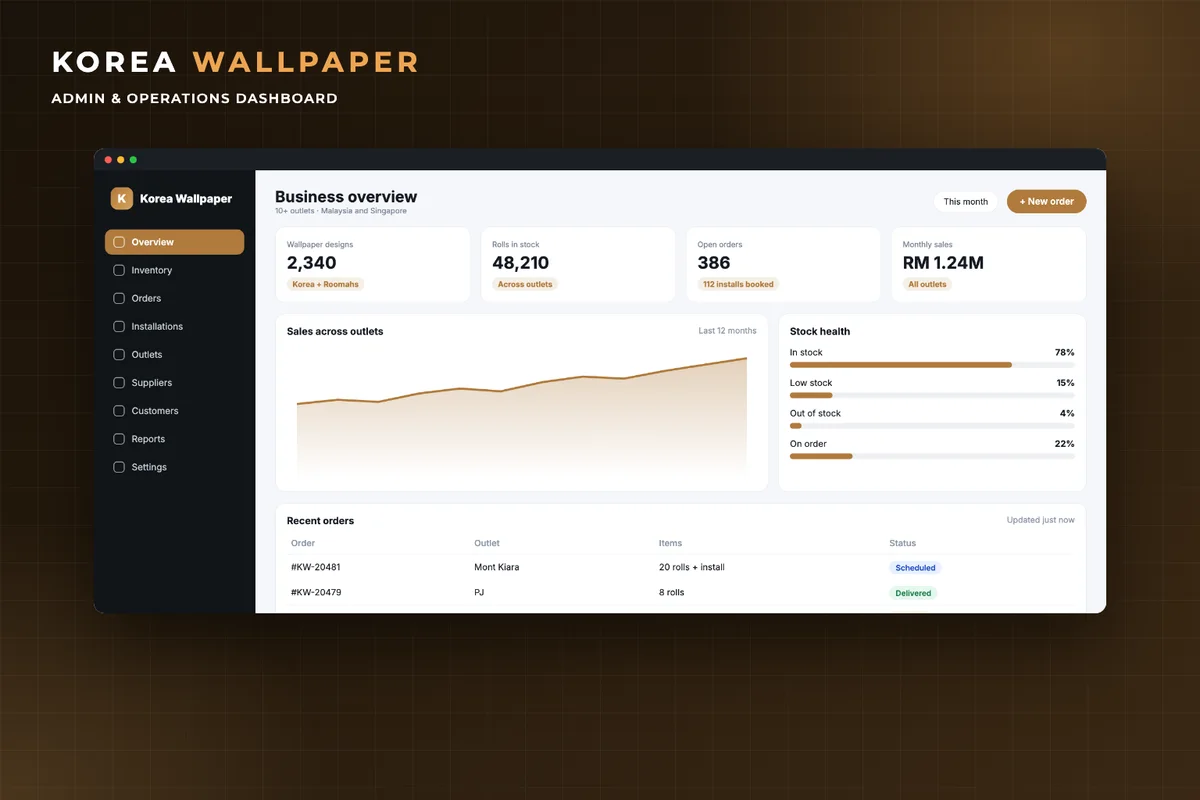
The Challenge: Why Did Korea Wallpaper Outgrow Its Systems?
Korea Wallpaper began with WordPress for its website and online sales. As it expanded to more than ten outlets and launched the Roomahs range, it needed a single system to manage stock, orders and operations efficiently. Its existing ERP code dated back to 2015 and had reached its limits in speed and scalability, which put day-to-day operations at risk.
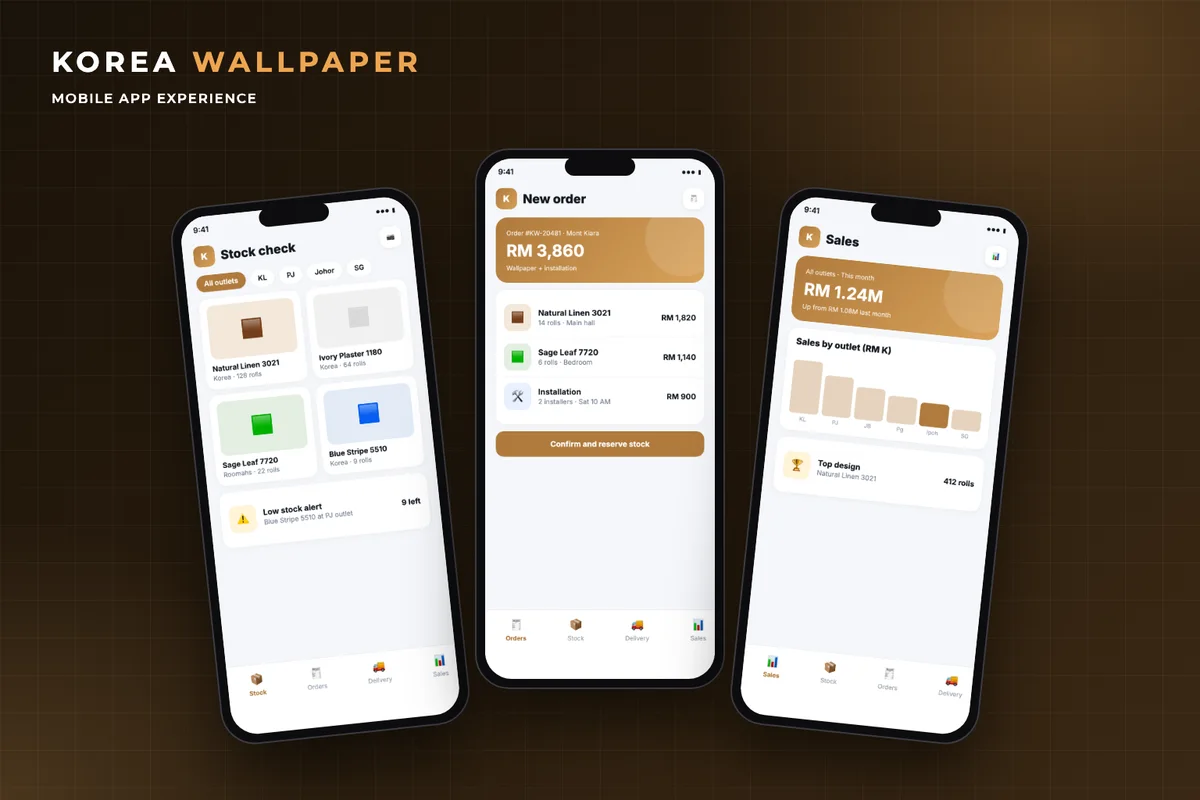
How Does the New ERP Support Daily Operations?
Staff check stock for any design across outlets, create orders that reserve the right rolls, and schedule installations with available teams. Low-stock alerts help managers move stock between outlets or reorder from suppliers before customers are disappointed. Managers follow sales by outlet and design to guide purchasing.
How Did We Migrate From the Legacy System Safely?
We kept the useful base functions of the 2015 system and focused on migrating the database to the new ERP without changing core data. After launch, we continued to upgrade the system based on the company's feedback, improving speed, scalability and management features as the business grew.