

How We Build an AI Voice Agent for Healthcare Appointment Booking
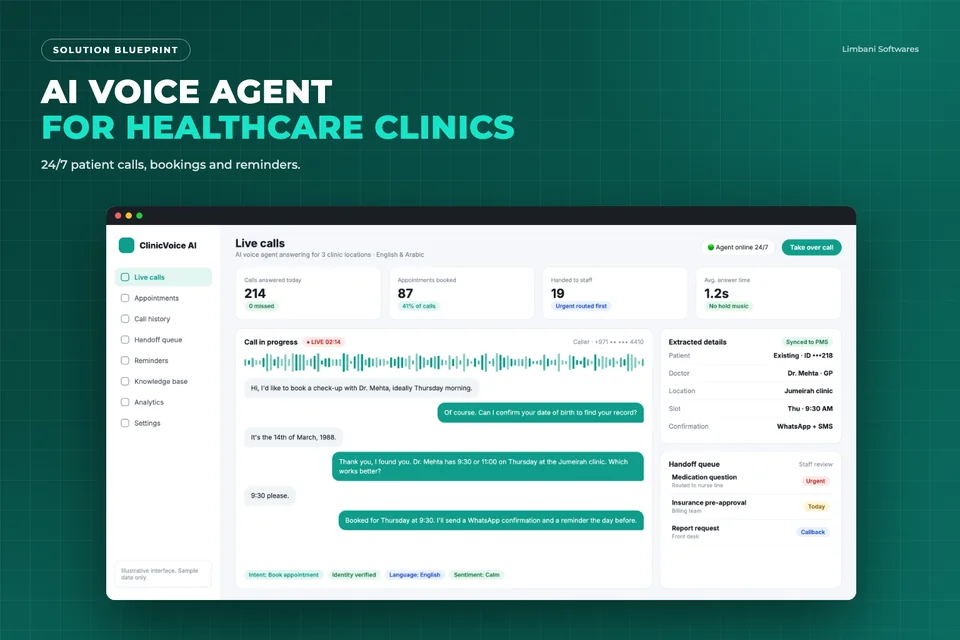
An AI voice agent for healthcare is a phone assistant that answers patient calls, understands what the caller needs and completes routine tasks such as booking, rescheduling and cancelling appointments. This solution blueprint shows how Limbani Softwares designs and builds one for clinics and hospitals: real-time speech, an LLM agent with clinic knowledge, n8n workflows connected to the practice management system, WhatsApp confirmations and safe handoff to staff for anything clinical or urgent.
Type
Solution Blueprint
Industry
Healthcare & Clinics
Channels
Phone, WhatsApp, Web
Core Stack
LLM, Twilio, n8n, EHR/PMS APIs
The Solution
The AI voice agent handles the conversation, n8n runs the clinic's booking rules, and staff stay in control of anything clinical, so every call is answered without adding front desk workload.
24/7 Call Answering
Every patient call is answered instantly, including evenings, weekends and peak hours, in English, Arabic or other languages the clinic serves.
Appointment Booking in Real Time
The agent checks live doctor calendars across locations, offers available slots and writes the booking directly into the practice management system.
Reschedule, Cancel and Reminders
Patients can change or cancel appointments by voice, and automated reminder calls or WhatsApp messages help reduce no-shows.
Patient Verification
Callers are matched to their record using details such as date of birth and phone number before any booking is changed.
Safe Clinical Handoff
Emergency or clinical keywords trigger an immediate transfer to staff or emergency guidance. The agent never diagnoses or gives medical advice.
Call Insights Dashboard
Clinic managers see calls answered, bookings made, handoffs and common questions, so they can improve scripts and staffing.
Technologies & Tools
An LLM voice agent, Twilio telephony, n8n workflows, WhatsApp notifications, PostgreSQL and pgvector, integrated with the clinic's EHR or practice management system.


Development Process
The development process involved the following stages:

Discovery

Call Flow Design

Compliance Review

Integrations

Real-Call Testing

Launch & Tuning
Why Do Clinics Need an AI Voice Agent?
Clinics lose patients when the phone is not answered. Front desk teams juggle walk-ins, insurance questions and calls at the same time, and after-hours calls often go to voicemail. Most calls are routine: booking, rescheduling, cancelling, opening hours, locations and insurance questions. An AI voice agent answers these calls instantly, completes routine tasks directly in the booking system and leaves staff free to focus on patients in the clinic. The goal is not to replace the front desk, but to make sure no patient call is missed.
How Does the AI Voice Agent Handle a Patient Call?
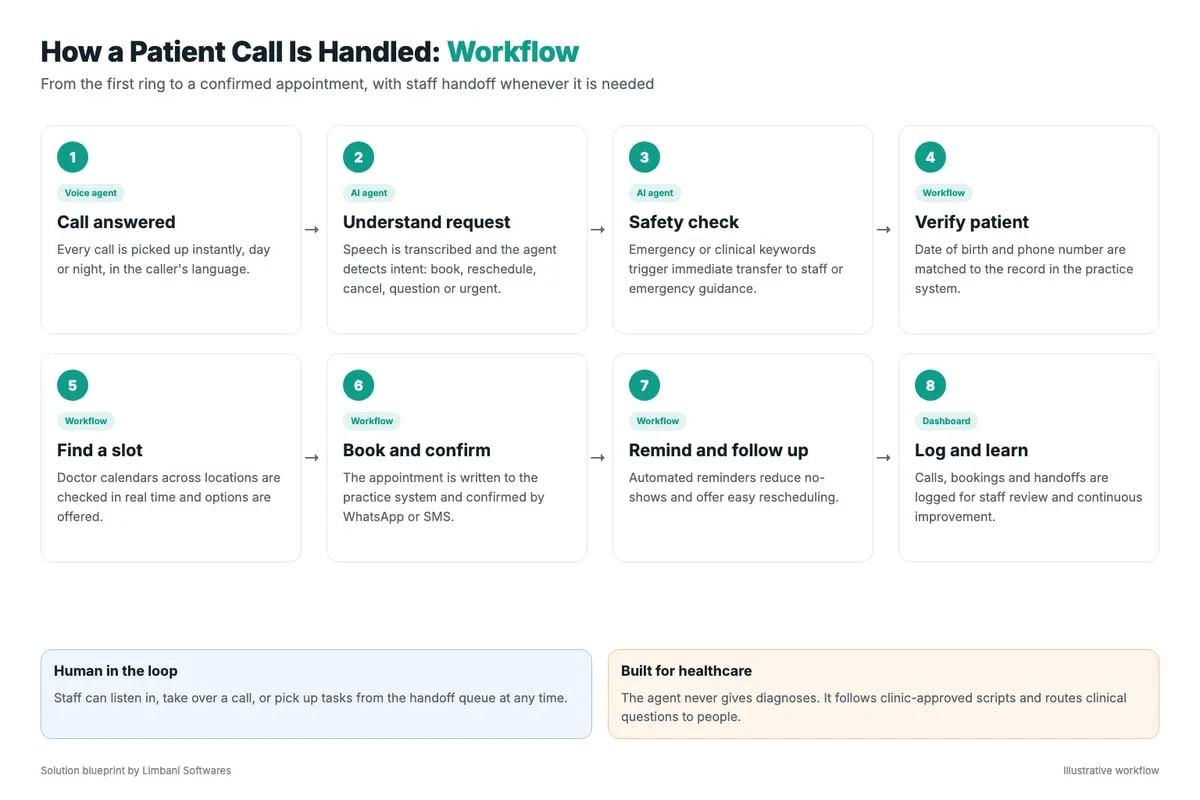
The call is answered in real time and transcribed as the patient speaks. The LLM agent identifies the intent, for example booking a check-up, and first runs a safety check for emergency or clinical language. It then verifies the patient against the practice record, checks available slots in the doctor's calendar and offers options. Once the patient chooses, the booking is written to the practice management system and confirmed by WhatsApp or SMS. Reminders follow automatically, and every call is logged with its outcome for staff review.
What Is the Architecture and Tech Stack?
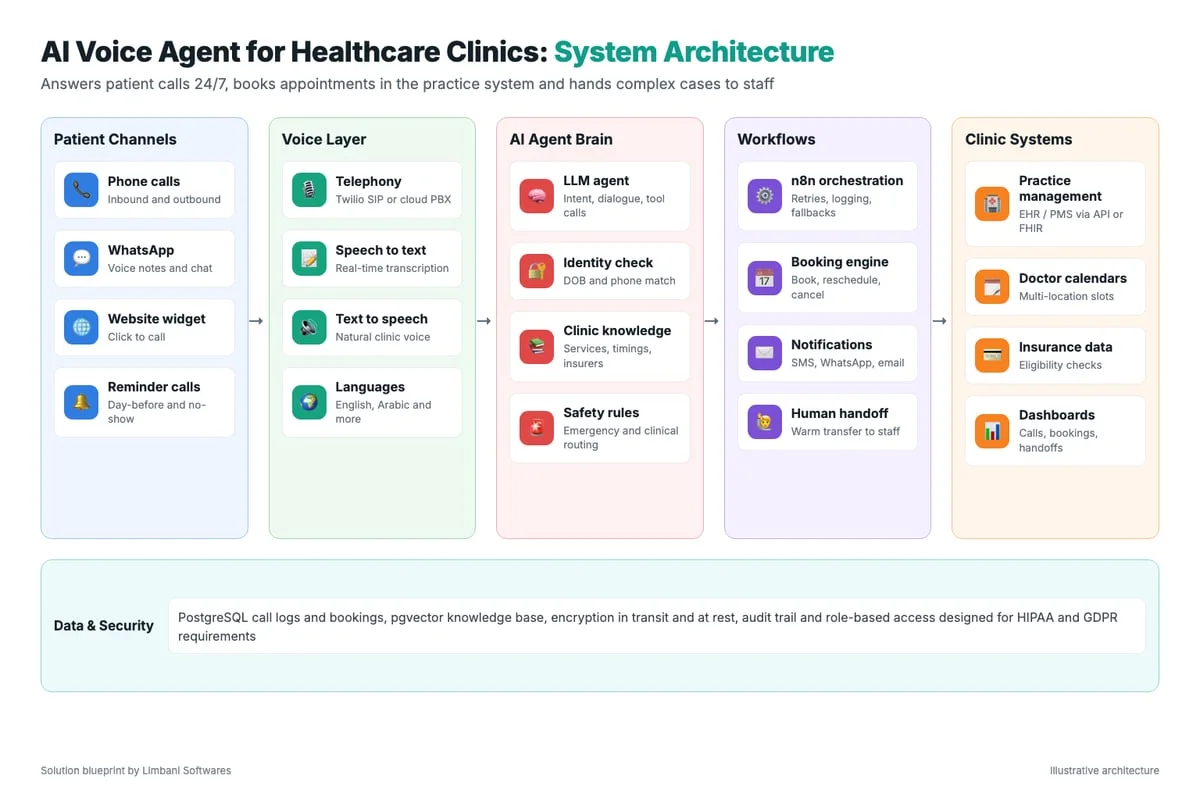
The blueprint separates the system into clear layers. Telephony such as Twilio carries the call, speech-to-text and text-to-speech services handle the voice, and an LLM agent manages the conversation using a clinic knowledge base stored in pgvector. n8n workflows execute the business rules: booking, reminders, notifications, retries and human handoff. The agent connects to the clinic's EHR or practice management system through its API or FHIR, and PostgreSQL stores call logs and outcomes. Encryption, audit trails, role-based access and vendor agreements are designed in from the start to support HIPAA, GDPR and local health data requirements.