

How We Build a Multi-Agent AI Content Writing System with Human Approval
An AI content writing agent is a system of specialised AI agents that plan, research, write, check and optimise content, instead of a single prompt that produces a generic draft. This solution blueprint shows how Limbani Softwares builds a multi-agent content system with a research agent, brief and writer agents, fact-checking, SEO, AEO and GEO optimisation, and a human approval step, then publishes to WordPress, Webflow or a headless CMS and tracks performance.
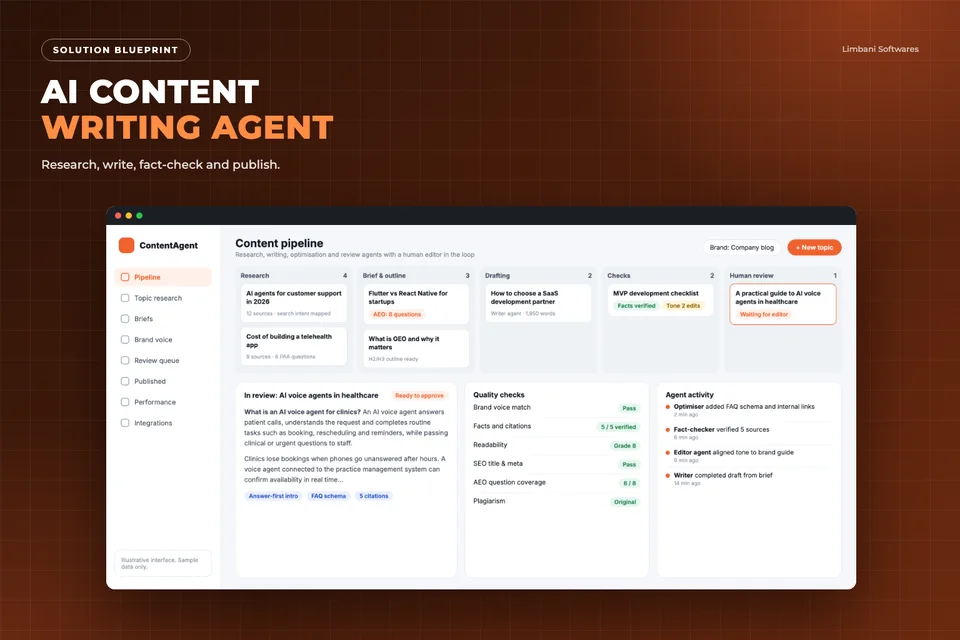
Type
Solution Blueprint
Use Case
Content Marketing Automation
Output
Blogs, Guides, Landing Pages
Core Stack
LLMs, LangGraph/n8n, pgvector
The Solution
Each agent does one job well, every claim is tied to a source, and a human editor has the final say, so teams publish more high-quality content without losing their brand voice.
Research Agent
Collects current, credible sources, the questions people actually ask and competitor coverage before any writing starts.
Brief and Outline Agent
Turns research into an answer-first outline with target questions, headings and internal link suggestions.
Writer and Editor Agents
Drafts in the brand's voice using a stored brand guide, then edits for tone, clarity and readability.
Fact-Checking and Originality
Every claim is checked against the research notes, and drafts are screened for plagiarism and duplication.
SEO, AEO and GEO Optimisation
Adds titles, meta descriptions, FAQ schema, internal links and answer-first sections so content can rank and be cited by AI assistants.
Human Approval and Publishing
An editor reviews and approves each article, which is then published to the CMS and tracked for rankings and AI citations.
Technologies & Tools
LLM writing agents orchestrated with LangGraph or n8n, a pgvector brand memory, PostgreSQL job history, and CMS and analytics integrations.


Development Process
The development process involved the following stages:

Content Strategy

Brand Guide Setup

Agent Design

Workflow Build

Editorial Testing

Launch & Measure
Why Do Teams Need a Multi-Agent Content System?
Content teams are asked to publish more, faster, and to optimise for search engines and AI assistants at the same time. Single-prompt AI writing tools produce generic drafts, invent facts and ignore brand voice, which creates more editing work and real risk. A multi-agent system breaks the job into steps that mirror a strong editorial team, with research, briefing, writing, editing, fact-checking and optimisation, and keeps a human editor in control of what gets published.
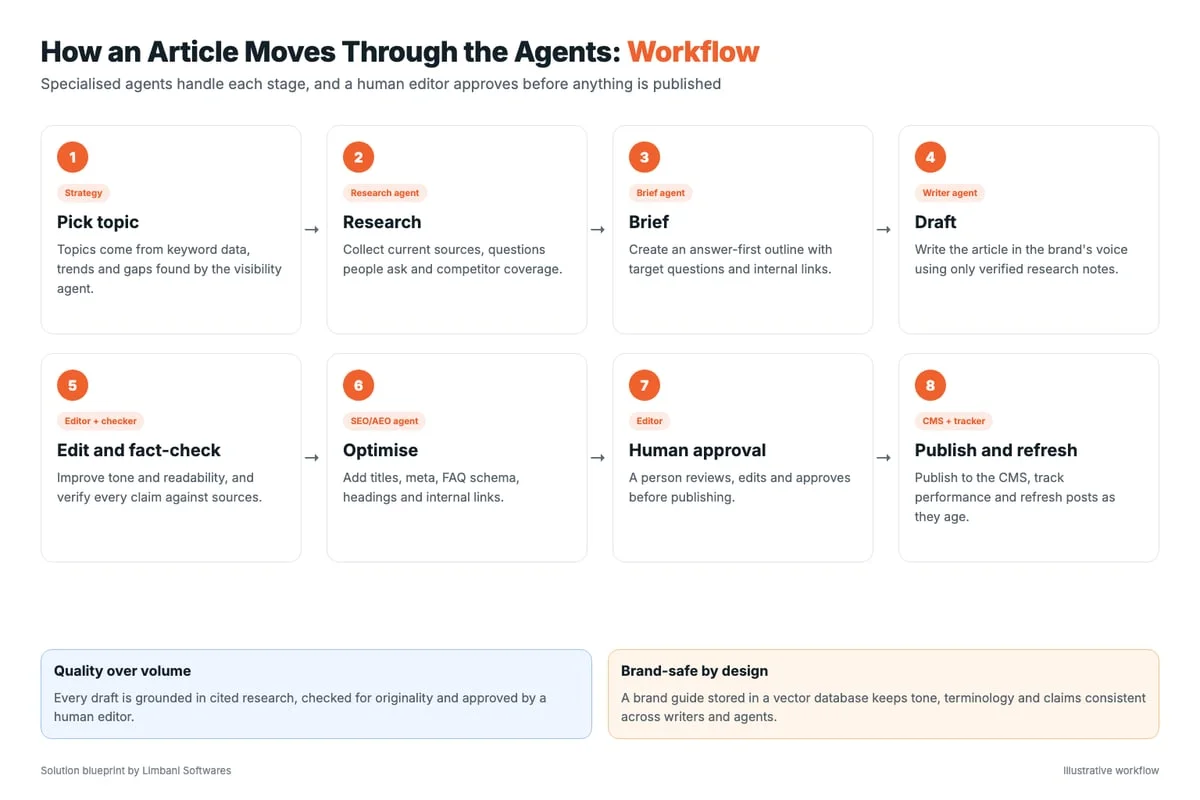
How Does an Article Move Through the Agents?
Topics come from keyword data, trends or gaps found by an AI visibility agent. The research agent gathers sources and real questions, and the brief agent creates an answer-first outline. The writer agent drafts using only verified research notes and the brand guide, then the editor and fact-checker agents improve tone and verify every claim. The optimiser adds SEO titles, meta descriptions, FAQ schema and internal links. A human editor reviews and approves the article, which is published to the CMS and tracked, and a refresh agent later updates posts as they age.
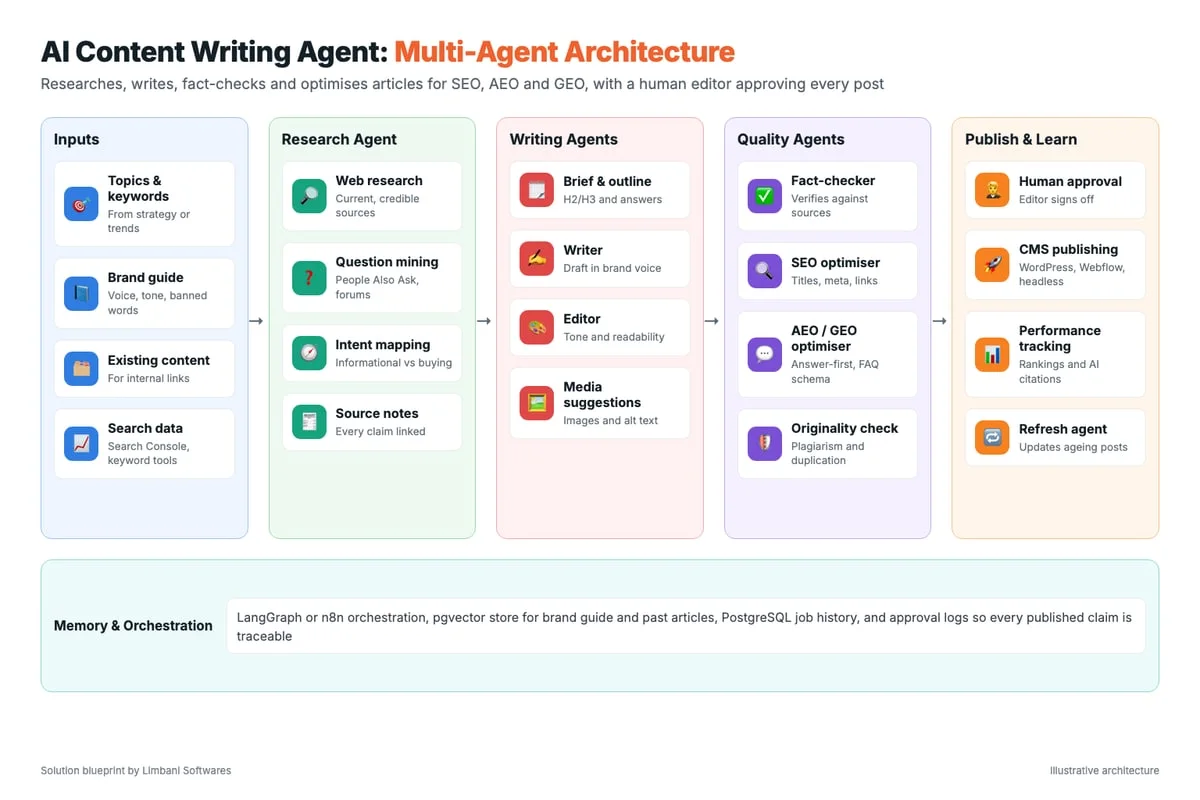
What Is the Architecture and Tech Stack?
The system uses LLMs such as Claude or GPT models for reasoning and writing, orchestrated with LangGraph or n8n so each agent has a clear role, inputs and outputs. A pgvector store holds the brand guide, product facts and past articles for consistent voice and internal linking. PostgreSQL records jobs, sources and approval history, so every published claim is traceable. Integrations connect to Google Search Console, keyword tools and CMS platforms such as WordPress, Webflow or a headless CMS, and a dashboard shows the pipeline, quality checks and content performance.